Murder at University Park
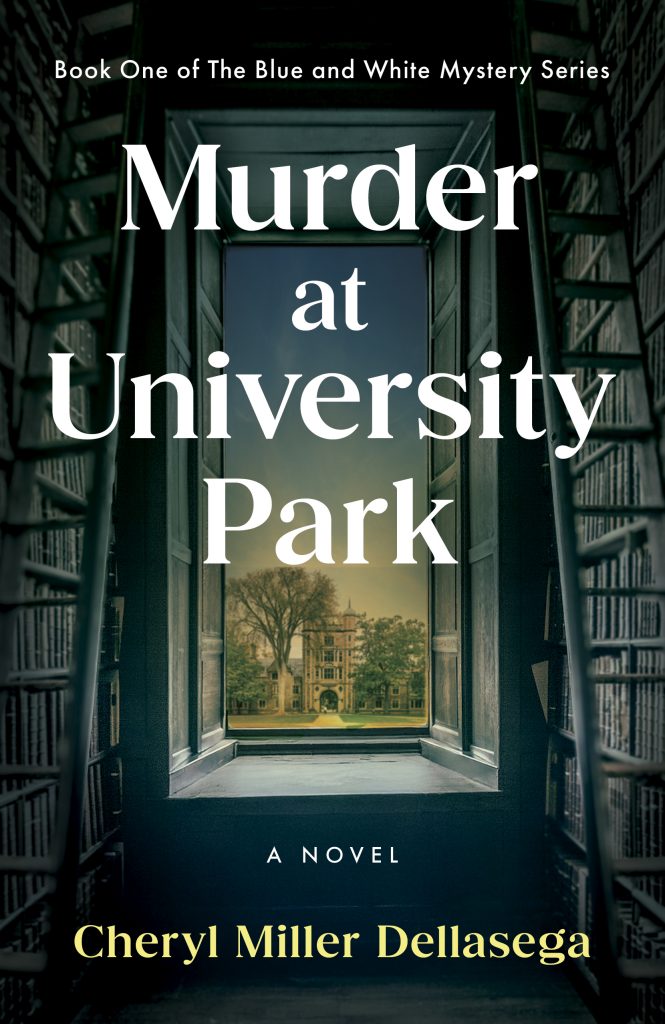 Buy the Book:
Amazon
Barnes & Noble
Bookshop.org
Published by: She Writes Press
Release Date: August 4, 2026
Pages: 256
ISBN13: 979-8896363569
SYNOPSIS
A brilliant young professor. A powerful advisor with everything to lose. A university campus hiding deadly secrets.
It’s 1998, and Dr. Lacey Redd is on the verge of tenure—and under the thumb of her department chair, the arrogant and celebrated Dr. Geoffrey Hart. When Lacey suspects Hart of falsifying his research, she quietly teams up with a tech-savvy colleague to uncover the truth. But before they can break the case, the friend and coworker turns up dead in the campus library.
As Lacey digs deeper, she uncovers something even darker: Hart has been preying on female graduate students for years. When he attacks her at a department party, Lacey fights back—leaving him injured and exposed. A new department head steps in, and with Hart out of the picture, it seems justice has finally been served.
But someone on campus is still watching. And they’ve decided Lacey knows too much.
PRAISE
“I was hooked from the first page of Cheryl Dellasega's thriller, Murder at University Park. Dellasega, an award-winning author of seven non-fiction books, turns her talents in arts and sciences, medicine and psychology, to death by murder in the last place expected. The stakes are high for Professor Lacey Redd, who is beset by a corrupt academic system, the target of a predator who can bring her family down, and the crushing murder of a loving friend who never saw it coming. Give yourself a thrill with this well-crafted story of love and death within the halls of University Park.”
—Maxine Paetro, author, #1 NYT bestseller, co-author with James Patterson
"Even readers familiar with academic feuds will revel in the adventures of Dr. Lacey Redd as she struggles for tenure and a happy marriage while trying to solve mysteries surrounding two colleagues. Cheryl Dellasega piles up plot twists no one will anticipate. I raced through her captivating novel, always rooting for Lacey Redd and eager to see just how vicious academia can become."
—Marlie Parker Wasserman, author of Inferno on Fifth
“With all the serious and too often unsolved crime over the years at Penn State University, it’s surprising almost no mystery novels have resulted. Now comes Cheryl Dellasega and Murder in University Park: A Blue and White Mystery. A former Penn State professor, she explores academic culture and a mysterious death at fictional “Mountain State University,” and brings the story to a satisfying and surprising conclusion.”
—David DeKok, author of Murder in the Stacks: Penn State, Betsy Aardsma, and The Killer Who Got Away
“Cheryl Dellasega's mystery features a cast of complicated characters who reveal sexism, jealousy, and deceit within academic politics. A dedicated university professor struggles to achieve tenure she deserves but that the male department head threatens to deny her. When her best friend's suspicious death may be murder, she vows to find the truth, even if the cost is her career, reputation, and family. Dellasega's excellent writing gives the reader a fascinating glimpse into a little-known world that's unexpectedly treacherous. Full disclosure: I was a freelance editor for this book and watched it develop into this compelling, well-drawn mystery with lots of twists. I recommend it wholeheartedly, not because of my role in it but in spite of that.”
—Debbie Burke, author of the award-winning Tawny Lindholm Thriller series
EXCERPT
In my office, I ate the sandwich I had packed knowing it would be a tight day, mentally rearranging the afternoon to allow me to get Meg and Tyler through dinner and homework in time for Ben to take them to soccer practice while I returned to meet Sandy. It was no different than many of my workdays, but I felt energized until walking in the door to class, a three-hour seminar on advanced applications in nutrition that taxed the stamina of both my students and me.
Fortunately, one of the tricks I learned during my rough first year of teaching was to include a hands-on activity to break up long lectures; today that involved small group work on developing special dietary plans for patients with nutrition problems. It was the kind of exercise soon-to-be graduates rated highly; those good evaluations from senior students would help with my tenure application, especially if Dr. Hart was going to criticize my performance in the classroom as well as with research.
In addition to the length of class, I dreaded seeing Rick Stein, the most difficult student of my career and a good part of the reason for my lack of teaching confidence. He had been a challenging student from his freshman year, but thankfully, he would graduate in the spring. That didn’t mean our remaining time together would be less difficult.
For once, he didn’t interrupt my lecture to point out a perceived mistake or overlooked fact, but he still sat in the front row, glaring at me with narrowed brown eyes. As soon as class ended and before I could escape to my office, he jumped out of his seat, waving the homework assignment I had returned in my face. He was over six feet tall with the exaggerated, muscular curves of a bodybuilder and the menacing looks of a television villain.
He said, “This is the first assignment of the semester and you’re already targeting me. I’m protesting this grade. I’ve never received anything lower than an A in my three years of college from any professor but you. This is unacceptable.”
It was an outrageous claim considering how poorly he performed in every other nutrition course I taught, but faculty had been getting memos lately about handing out higher grades than students earned. “Grade inflation will not be tolerated,” the notice from President Martin had said, but when overbearing parents and entitled students made life miserable for the teacher who gave a B rather than an A, we all knew who would prevail.
“Rick, you can see from my comments that you didn’t address four out of the five criteria on the syllabus.” I continued gathering up my things and edged toward the door, desperate to be on my way.
A few other students stopped filing out of the room, watching us like drivers rubbernecking to see a car accident. Faima Mahair, my teaching assistant, backed away from the two of us.
“We’ll see, we’ll see. I know you’re on tenure track, and I can make things very uncomfortable for you.”
I tried to return his gaze evenly. “You didn’t meet the requirements, and now you’re very close to violating university behavioral conduct guidelines.”
For a moment, he towered over me as if ready to say more, but then he picked up his things and left.
Once everyone was gone, Faima looked at me, wide-eyed. “I never want to teach if I have to deal with students like him.”
***
Wade Cross, my office mate and a junior faculty like me, came in just as I was sorting my class handouts into file folders for next year when I taught it…if there was a “next year” for me.
“Hey, Lacey. How was the camp-out?”
I repeated the summary I’d given Sandy, and he brightened.
“It’ll be awesome when I can take my boys out in the woods for an overnight,” he said. “They’ll love it, and what better way to get out of town on a football weekend?”
The idea of Wade and his extremely active three-year-old twins in a tent for an entire night almost made me laugh, but I didn’t want to ruin his enthusiasm. I was about to dash out the door when I remembered my surprise meeting.
“Dr. Hart had Florence set up an ‘urgent’ meeting with me tomorrow. Has she gotten in touch with you, too?”
“No, but maybe she will. I’m sure he just wants to make sure everything for your sixth-year tenure review is in order.”
“That’s what worries me. I know we both got brutal two-year reviews, but then fourth year went easier, right? It seems like this year should be a slam-dunk.”
Secretly, I knew his chances for tenure were better than mine. As a graduate of Yale, he was automatically part of Dr. Hart’s clique of male Ivy Leaguers. In addition, unlike me, he was the kind of easygoing teacher who ad-libbed lectures, dropped into the gym for a game of pick-up basketball with students, and participated in their rallies and fundraisers. He had a Gumby obsession that led to good-natured teasing and was readily available to review papers or craft grant submissions for Dr. Hart at all hours. His payoff was bound to be tenure, while I, the department’s first female hire, was on less secure footing.
Both of our spouses had jobs that assured a steady income (my husband, Ben, was an accountant, and Wade’s wife, Gracie, was a nurse), but earning tenure was a deal breaker none of my teachers had discussed in graduate school: if denied, I would be out of a job. Maybe if I had known that I would have pursued a more secure career track.
Wade toyed with his Gumby keychain. “Well, until we get that final notification from the university, we’re like those little ducks circling around on a runner at the carnival, with the tenure review committee holding popguns, trying to shoot us down.”
He wasn’t wrong. Tenure track was a ticking timer that started the moment a new faculty stepped on campus, counting off the days until six years later when either termination or a lifelong guarantee of employment would result. Although there were criteria for all candidates, the unspoken achievements often swayed decisions. Little things like rave reviews posted online on Rate My Professor, networking across campus, favorable appearances in public media, and even being respectful of senior faculty by always using their titles and never assuming a first-name basis were factored into tenure and promotion decisions off the record.
I said, “Dr. Hart has a good reason to shoot me down. He gave me permission to use SIMS data for publication, but when I opened the disk, the numbers were way off. Faima and Sandy looked at the file, too, and it didn’t make sense to them, either.”
“Faima? She’s one of the best graduate students we’ve got. And if Sandy couldn’t figure it out, no one can”
“I know. Sandy’s taking a second look at it and we’re getting together tonight to see what she comes up with.”
“That’s weird. I’ve worked on that data without any trouble. Maybe it’s a defective disk?”
I shook my head. “Already suggested that. Do you think Dr. Hart might be setting up a test to see how good a researcher I am?”
“Come on, Lacey. Geoff doesn’t want to see you crash and burn.”
Wade was on a first-name basis with our chair and an optimist about our boss. It would be hard to convince him that failure was exactly the outcome I suspected Dr. Hart wanted, despite his pretending support whenever we were with other people, but that wasn’t a topic I could discuss with anyone other than Ben and Sandy. Even the handful of classmates I kept in touch with from my doctoral program were shocked when I hinted at the outright sabotaging Dr. Hart directed at me. While they admitted it was common for women to face a different set of expectations in the world of academe, none of them knew about the side of him that emerged in the privacy of his office. There, he made it clear he wasn’t about to accept a female faculty in the Department of Nutrition, even if there were affirmative action mandates.
Seeing me crash and burn wouldn’t bother him in the least.